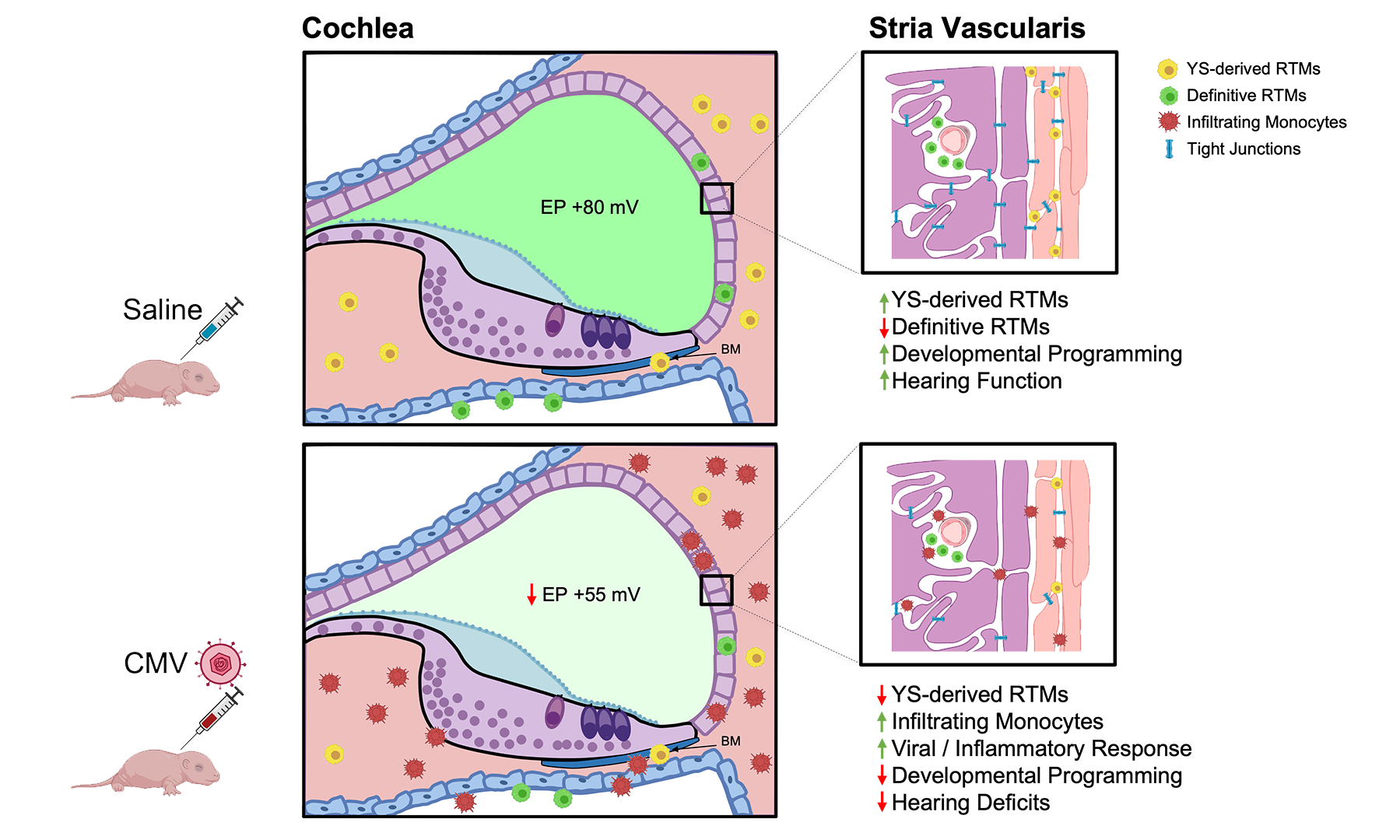
Mechanisms of CMV-Mediated Hearing Loss
The cochlea is a delicate and structurally complex component of the peripheral auditory system, highly sensitive during development to early-life infection and inflammation. Sensorineural hearing loss (SNHL) resulting from cochlear dysfunction is a common manifestation of congenital infections, such as cytomegalovirus (CMV). Although the mechanisms underlying CMV-associated SNHL remain poorly understood, emerging evidence indicates that cochlear inflammation can persist long after the resolution of active viral infection, contributing to progressive hearing loss over time.
The long-term goal of this project is to define the mechanisms by which CMV infection disrupts cochlear immune development in early life and drives the pathogenesis of SNHL. Our research centers on the role of fetal-derived resident tissue macrophages (RTMs), which seed key cochlear tissues in a spatiotemporally regulated manner essential for proper Mechanisms of CMV-Mediated Hearing Loss. We aim to elucidate how RTMs mediate cochlear tissue homeostasis, the pathological effects of CMV on RTMs and cochlear structures, and the relationship between fetal-derived RTMs and tissue architecture.
n particular, we are interested in how RTMs regulate extracellular matrix (ECM) morphogenesis and development within cochlea. We are especially focused on understanding how RTMs influence the development and long-term maintenance of the stria vascularis (StV), a specialized structure critical for cochlear homeostasis and hearing function. By defining these mechanisms, our work will provide new insight into the intersection of immune development, cochlear structural integrity, and the pathogenesis of CMV-associated hearing loss.